Across the world, ancient structures continue to challenge modern assumptions about technology, labor, and engineering capability. Massive monuments built thousands of years ago remain standing today, often with a level of precision and durability that rivals — and sometimes surpasses — modern construction.
What makes these structures remarkable is not just their size or age, but the conditions under which they were built. Many were constructed without steel tools, modern machinery, or advanced mathematical notation. Yet their design, alignment, and longevity raise an important question: how did ancient builders achieve results that modern engineers still struggle to fully explain?
Precision Without Modern Tools
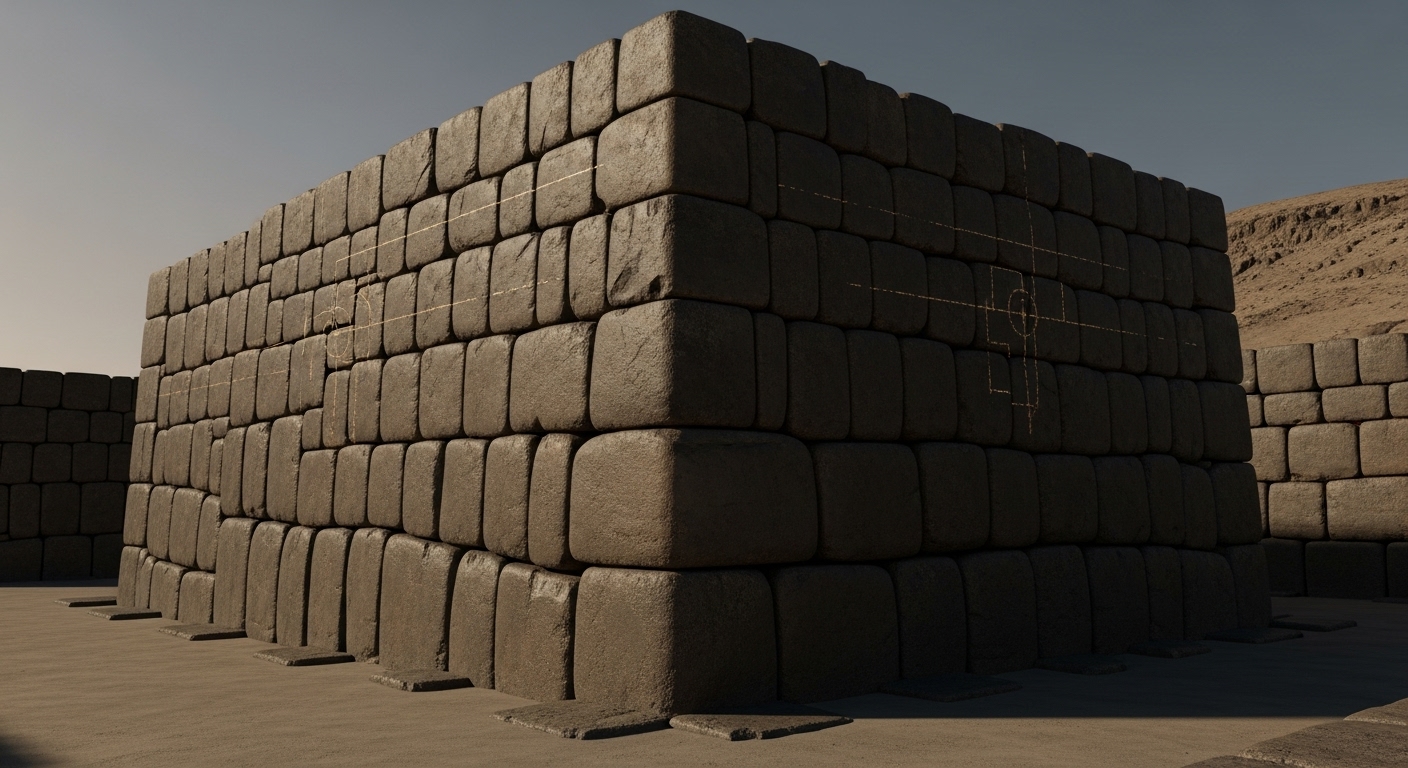
One of the most striking features of ancient construction is precision. In many ancient sites, stone blocks fit together so tightly that a blade of grass cannot be inserted between them.
This level of accuracy suggests careful planning, standardized measurement, and a deep understanding of materials. Ancient builders achieved consistent results across massive structures, indicating that precision was not accidental, but systematic.
Modern engineers recognize that achieving such precision at scale requires advanced surveying techniques. How ancient societies developed and maintained these methods without modern instruments remains an open question.
The Challenge of Moving Massive Stone Blocks
Some ancient structures contain stones weighing tens or even hundreds of tons. Transporting and lifting such materials presents serious logistical challenges even with modern equipment.
In the ancient world, builders relied on human labor, simple tools, and natural forces. Archaeological theories propose the use of ramps, sleds, rollers, and counterweights. While these methods are plausible, they often fail to fully explain the efficiency and consistency observed across large construction projects.
The absence of definitive evidence for construction techniques leaves room for continued debate among historians and engineers.
Structural Longevity Beyond Modern Expectations
Modern buildings are often designed with a lifespan of decades or centuries. Many ancient structures, however, have endured for thousands of years.
This durability reflects a different engineering philosophy. Ancient builders prioritized stability, weight distribution, and environmental adaptation. Structures were designed to withstand earthquakes, erosion, and climate extremes long before modern engineering codes existed.
In some cases, ancient materials have proven more resilient than modern equivalents. Researchers continue to study these materials in an effort to improve contemporary construction practices.
Mathematical and Geometric Mastery
Ancient architecture frequently incorporates complex geometric relationships. Symmetry, proportional ratios, and alignment with natural features appear consistently across cultures.
These patterns suggest a sophisticated understanding of geometry applied in practical ways. Builders used mathematical principles not only for aesthetics, but for structural integrity and efficiency.
What is particularly intriguing is that similar geometric concepts appear in civilizations separated by vast distances, raising questions about independent discovery versus shared knowledge.
Alignment With Natural Forces
Many ancient structures were deliberately aligned with the sun, stars, or surrounding landscape. These alignments served practical, symbolic, and ceremonial purposes.
From an engineering perspective, such alignment required long-term observation and precise planning. Builders had to account for seasonal changes, solar movement, and environmental conditions.
These considerations demonstrate that ancient engineering was closely integrated with natural observation, rather than isolated from it.
Labor Organization and Social Engineering
Large-scale construction projects required more than technical knowledge. They demanded effective organization, leadership, and resource management.
Ancient societies mobilized thousands of workers over extended periods, coordinating labor, food supply, and materials without modern communication systems. This level of organization reflects advanced social engineering alongside physical construction.
The ability to sustain such projects suggests stable governance structures and shared cultural motivation.
Why Modern Engineers Still Study Ancient Structures
Modern engineers and architects continue to analyze ancient construction for practical insights. These structures offer lessons in sustainability, durability, and material efficiency.
In an era of rapid construction and short design lifespans, ancient buildings demonstrate the value of long-term thinking. Their continued survival challenges modern assumptions about progress and innovation.
Rather than viewing ancient engineering as primitive, many experts now recognize it as optimized for its environment and purpose.
What These Structures Teach Us Today
Ancient structures remind us that technological advancement does not follow a simple upward trajectory. Knowledge can be gained, refined, and lost.
The achievements of ancient builders reveal the power of observation, experimentation, and collective effort. They show that innovation arises not only from technology, but from understanding the world deeply and working within its constraints.
As research continues, these structures remain silent witnesses to human ingenuity — still standing, still studied, and still raising questions that modern engineering has yet to fully answer.