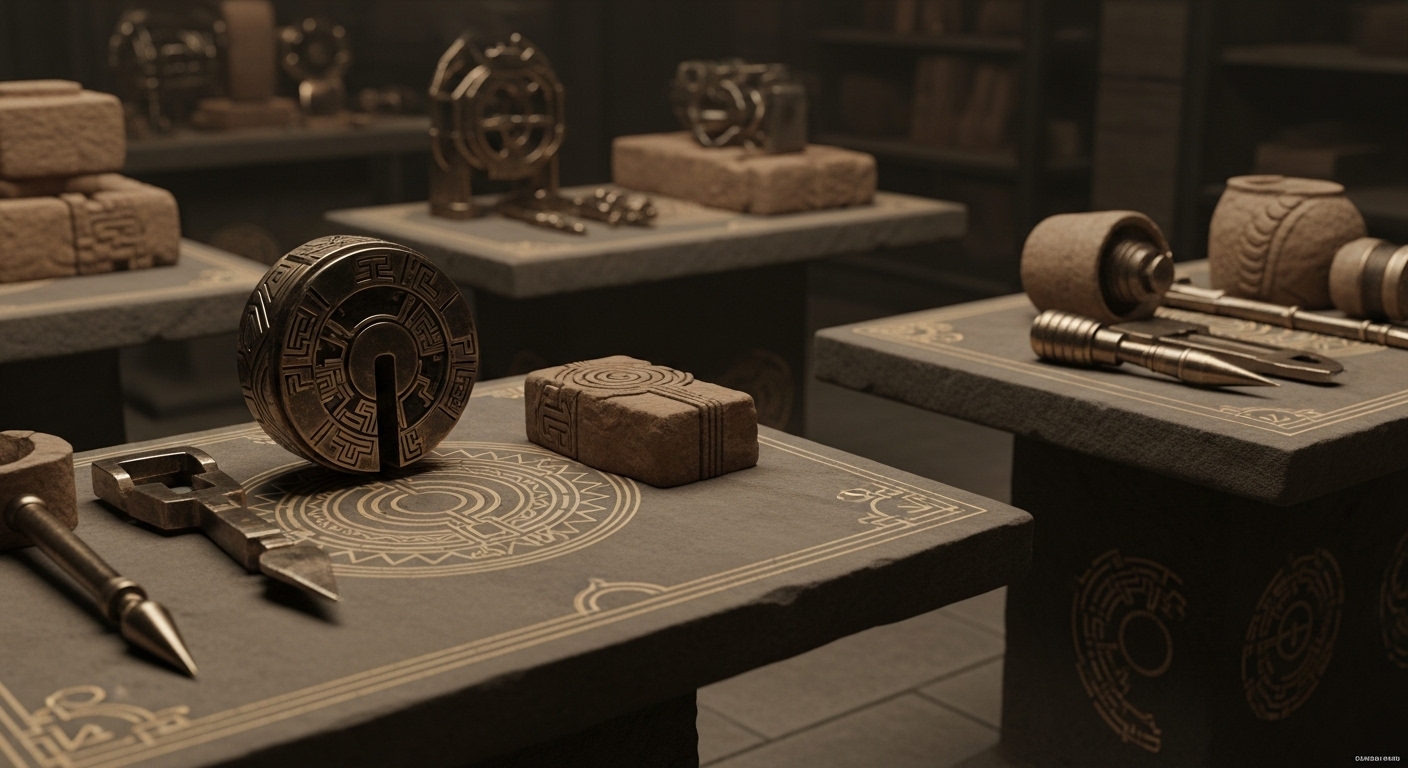
Modern history often presents technological progress as a straight line, steadily moving forward from primitive tools to advanced machines. Yet the archaeological record tells a more complex story. Across different periods and regions, ancient technologies emerged that were surprisingly sophisticated for their time — only to later disappear, leaving little trace of how they were made or why they were lost.
These vanished technologies challenge the assumption that human innovation always moves in one direction. Instead, they suggest cycles of discovery, loss, and rediscovery shaped by social stability, environmental change, and historical disruption.
Technological Knowledge Is Fragile
Unlike modern societies that rely on written manuals, digital storage, and institutional education, ancient civilizations often preserved technical knowledge through apprenticeship and oral transmission. Skills were passed directly from master to student, generation by generation.
When social systems collapsed, these chains of knowledge broke. Without formal documentation, complex techniques could disappear within a single generation. The technology itself might survive physically, but the understanding required to reproduce it would be lost.
This fragility helps explain why some ancient innovations appear briefly in history, only to vanish entirely.
Materials That Outlasted Their Makers
Archaeological discoveries reveal materials and manufacturing methods that remained unmatched for centuries after they were created. Certain ancient concretes, metals, and compounds exhibit durability and resilience that modern scientists still study today.
These materials were often developed through experimentation rather than theoretical science. Craftspeople refined techniques over generations, learning through trial and error how to manipulate natural resources effectively.
When the cultures that supported this experimentation declined, the specialized knowledge behind these materials disappeared with them.
Precision Tools Without Industrial Machinery
Some ancient tools display levels of precision that seem incompatible with the technology commonly attributed to their time. Smooth stone surfaces, perfectly drilled holes, and finely shaped components suggest the use of advanced techniques.
While modern research offers plausible explanations involving abrasives, simple machines, and patient labor, the consistency of results remains striking. These tools required not only physical effort, but also deep understanding of materials and controlled processes.
In the absence of surviving workshops or instructions, historians can only infer how these techniques were achieved.
Technologies Tied to Specific Cultural Systems
Many ancient technologies were not widely shared. They were closely tied to particular regions, religious practices, or political systems.
Some innovations were considered sacred or restricted, limiting their transmission beyond select groups. Others depended on centralized authority or stable economic networks to function.
When these systems collapsed, the technologies tied to them often disappeared as well. Without the social framework to support them, even effective innovations could not survive.
Environmental Change and Technological Loss
Environmental shifts have played a significant role in the disappearance of ancient technologies. Changes in climate, resource availability, or geography forced societies to adapt rapidly.
Technologies optimized for one environment could become impractical in another. Agricultural tools, water management systems, and construction methods designed for stable conditions sometimes failed under new pressures.
As societies adapted, older technologies were abandoned, and the knowledge behind them faded from memory.
Why Some Technologies Were Not Rediscovered
In some cases, lost technologies were not rediscovered because they were no longer necessary. Human societies adapt solutions to immediate needs, not historical curiosity.
If a vanished technology solved a problem that no longer existed, there was little incentive to revive it. In other cases, alternative methods emerged that were easier to implement, even if they were less efficient.
This selective rediscovery shaped the technological paths that eventually led to the modern world.
Rethinking Progress Through the Lens of Loss
The disappearance of ancient technologies challenges the idea that progress is always cumulative. Innovation depends not only on discovery, but on continuity.
Periods of stability allow knowledge to accumulate. Periods of disruption — war, collapse, environmental stress — can erase generations of expertise.
Understanding this cycle encourages a more nuanced view of human history, one that recognizes both ingenuity and vulnerability.
Lessons for the Modern World
The study of vanished technologies offers important lessons for modern society. Knowledge requires preservation, not just invention. Systems must exist to protect and transmit expertise across generations.
Ancient civilizations remind us that technological achievement alone does not guarantee survival. Social organization, environmental balance, and cultural continuity are equally important.
By studying what was lost, modern researchers gain insight into how to safeguard the knowledge we depend on today.